
Background scientific research information facts: by edgardowelelo@yahoo.com, Master of the Game
Geologically, Africa is a very old continent. Together with South America, Australia, India, and Antarctica, it was once part of a supercontinent, the ancient Gondwanaland. When that huge southern landmass broke up more than 65 million years ago, Africa was left pretty much with the familiar shape it has today. For nearly the entire length of its shores, the land rose to elevations of more than 1,000 feet within a few miles of the sea. The same geologic forces that broke up Gondwanaland fissured EASTERN AFRICA, creating the long chain of lakes, escarpments, and volcanoes of the Rift Valley system. But for millennia the central African plateau remained relatively undisturbed. Unlike other continents, Africa was neither submerged by ancient seas nor scoured by Ice Age glaciers. Almost 12 million square miles in area, Africa is the second largest continent. With the equator running through its middle, most of it lies squarely in the TROPICS. But Africa is not a jungle continent. Aside from a rainy zone of equatorial forest along the Atlantic coast and the Congo basin, most areas receive less than 40 inches of rain a year. Since rainfall is concentrated in distinct wet seasons, many months are entirely dry. Even where annual precipitation is high, a tremendous amount of water is lost immediately in heavy runoff, with later loss through evaporation over the long dry periods. By far the greater part of Africa is covered by zones of vegetation adapted to varying degrees of aridity: savanna and desert. The Sahara, largest desert in the world, blankets the northern third of the continent from the Atlantic coast to the Red Sea. In that brutal thirst land, less than 5 inches of rain fall per year throughout a 1,000 – mile – wide east- west belt. Even that precipitation is extraordinarily variable: interior regions may go years without a drop. The Sahara is inhospitable, although it is by no means a monotonous sea of sand. There are indeed large expanses of shifting dunes, the great erg, but also extensive barren rock plateau known as hamada, and whole regions of reg, covered by empty, pebbly plains. High mountains, notably the Algerian Hoggar (Alhaggar) and the Tibesti Massif of Chad, form an upland backbone in the desert’s center. Although the highest Saharan summits, the Volcano Emi Koussi (11,023 feet.) and Tousside Peak/Tarso Tousside (10,711 feet.), are found in the Tibesti, the grandeur of desert scenery is best seen among the volcanic spires of the Hoggar and the tortured sandstone cliffs of the nearby Tassili – N – Ajjer mountains. Although some desolate regions are almost sterile, like the Tanezrouft of southern Algeria, the Sahara is not devoid of life. Hardy trees and shrubs manage to cling to various desert niches, while grasses lie dormant until awakened by infrequent storms. Small animals – mostly insects, reptiles and rodents – and even a few species of antelope, have successfully adapted to life without drinking water. In the mountains of the central desert, rock pools and oases provide enough moisture for desert nomads, such as the famous Tuareg of the Hoggar. Rock paintings tell us that the Sahara has not always been a desert, but has been undergoing a dramatic drying – out process within recent times. Portraits of giraffe and elephant in the waterless heart of the Tassili are sure signs that the region was much wetter only 7,000 years ago. Later paintings show that the Sahara was inhabited by cattle – herding peoples until roughly 1,200 B.C. Generations of gradual desiccation eventually forced most Saharan peoples and animals to emigrate. The desert was left to the few species and tribes that could survive its increasingly harsh conditions. The Sahara is fringed by areas of higher rainfall and denser human occupation. Although the desert reaches all the way to the sea in parts of Egypt and Libya, most of Africa’s northern coast enjoys a delightful Mediterranean climate. Moderate winter rains permit intensive agriculture and a heavy human population.
On the southern edge of the Sahara is the SAHEL, a semi desert transition zone to the savannas of black Africa. Rainfall is very irregular there, but averages from 10 to 20 inches per year. In some well – watered areas, tribes have settled and are able to raise crops. But most people of the SAHEL are pastoral nomads, who must constantly move their herds in search of water and fresh pasturage. In recent years, the SAHEL has been hard hit by droughts that have caused devastating famine. Such droughts occur regularly in the SAHEL, and are part of the continuing climatic desiccation that created the SAHARA. But increased human population, permanent settlement, and overgrazing are quickening the process of desertification: the zone of true desert, the SAHARA, advances southward a few miles each year. The Sahara has played a significant role in African and human history. Its birth concentrated human populations along the river NILE, where agriculture first developed (between 7,000 and 5,000 B.C.) and subsequently required ever greater levels of cooperation. By the time the PHAROAHS had built the Great Pyramids (c.2, 500 B.C.), the desert had become a nearly impassable barrier to the lands to the south. Throughout history, caravans of desert traders crossed the vast emptiness, returning with slaves, ivory, gold, and strange tales. But it was a tenuous contact. The Sahara formed an environmental barrier that left Africa isolated from the events of the Mediterranean world. Even today it remains the fundamental boundary between the ARAB SPHERE of North Africa and the equatorial regions of black Africa.

South of the SAHEL, rainfall increases markedly, and the country greens up into the lightly wooded grasslands known as TROPICAL SAVANNAS. Like the SAHARA, the SAVANNA ZONE stretches across Africa in an unbroken east – west band. In West Africa, the Guinea Savanna belt merges into the zone of the equatorial rainforest. In the drier east, Savannas dominate the HIGH EAST AFRICAN PLATEAU, spreading deep into the South African region. There are many different types of Savanna country: some are pure grasslands, while others are dominated by various woodland communities. As a whole, the Savannas are the African “bush” – the classic big game country. The game reserves and national parks of the Savanna zone are without doubt the principal draw for visitors to Africa. It is in the celebrated reserves of East and Southern Africa that the greatest concentrations of animals remain. West Africa has a much bigger human population. Over time, its wildlife has gone into the cooking pot, and is now seriously reduced in numbers. The Savannas are also home to an incredible variety of peoples. All across the northern Savannas and throughout the grasslands of EAST AFRICA, pastoral tribes depend on cattle for their livelihoods. Because the Savanna Zone receives higher rainfall than the drier regions to the north, some 20 to 40 inches a year, it is far richer cattle country. Nevertheless, rain is irregular and seasonal, so cattle herding tribes have been traditionally been nomadic. Nomads tend to cling to their old way of life more fiercely than do agriculturalists. Since they retain their ancestral customs and colorful dress, they are of prime interest to visitors. Fertile and well – watered Savanna regions are inhabited by settled agricultural peoples who have received more stimulus toward westernization and modernization. In farming districts, schools and administrative centers have been in place since colonial times, and most people have abandoned traditional garb in favor of Western clothing. Their tribal religious have largely been supplanted by Christianity or Islam, and native customs have been severely modified by the influence of missionaries. Although much more numerous than their pastoral neighbors, agricultural tribes and regions tend to be overlooked by tourism. The forest region, the fabled African jungle, is limited to the southern coastal areas of the West African bulge, and the Congo basin of central Africa. Rainfall averages more than 80 inches a year on the coast, and 60 in the interior. Like TROPICAL RAINFOREST all over the world, Africa’s equatorial forest is an ancient ecosystem, the product of ages of environmental stability. Rainforests are the most complex of all land habitats, and the most endangered.
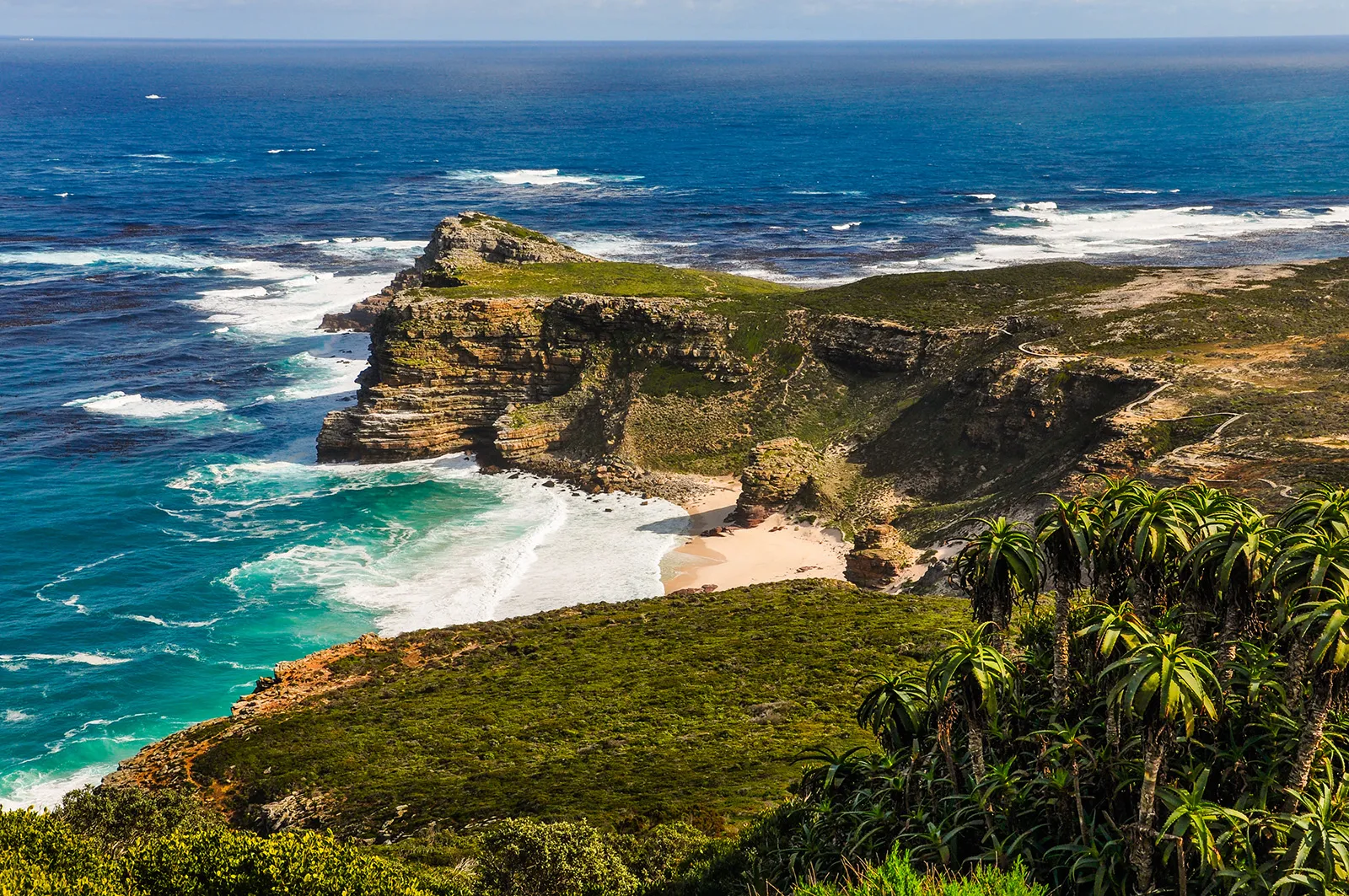
The West African forests are now heavily settled. Virgin rainforest there has been largely replaced by plantations of cocoa, rubber, oil palms, and subsistence farms. What RAINFOREST remains is threatened by mechanized logging operations and increasing settlement. Its wildlife is under intense pressure, not only from habitat destruction but from its regular use as a source of food. The animals of the rainforest, which include a variety of monkeys and birds, are not easily viewed, so the potential for tourism in forest reserves is neglible. The climate – humid and jangle – hot is also unfavorable. Visitors go to West Africa mostly for its cultural attributes, particularly the powerful expression of its traditional artwork and dance. The Tropic of Capricorn marks the edge of the distinctly temperate South African region. The tropical savanna, with its typical baobabs and umbrella – shaped acacia trees, gradually gives way to plant communities that can tolerate a definite period of cool weather. Temperate grasslands appear on the plains of South Africa’s Transvaal, and the Mountains of Natal and Lesotho are seasonally dusted with snow. The climate gets progressively drier toward the south Atlantic coast, the semidesert Kalahari merging into the true desert conditions of the NAMIB. The Indian Ocean warms the land on the eastern coast, so semitropical climate persists almost to the Cape of Good Hope. The Cape marks the very southern tip of Africa, where a Mediterranean climate, mild with a cold winter season, produces scrubby vegetation similar to that of the Algerian coast.
HUMANKIND IN AFRICA
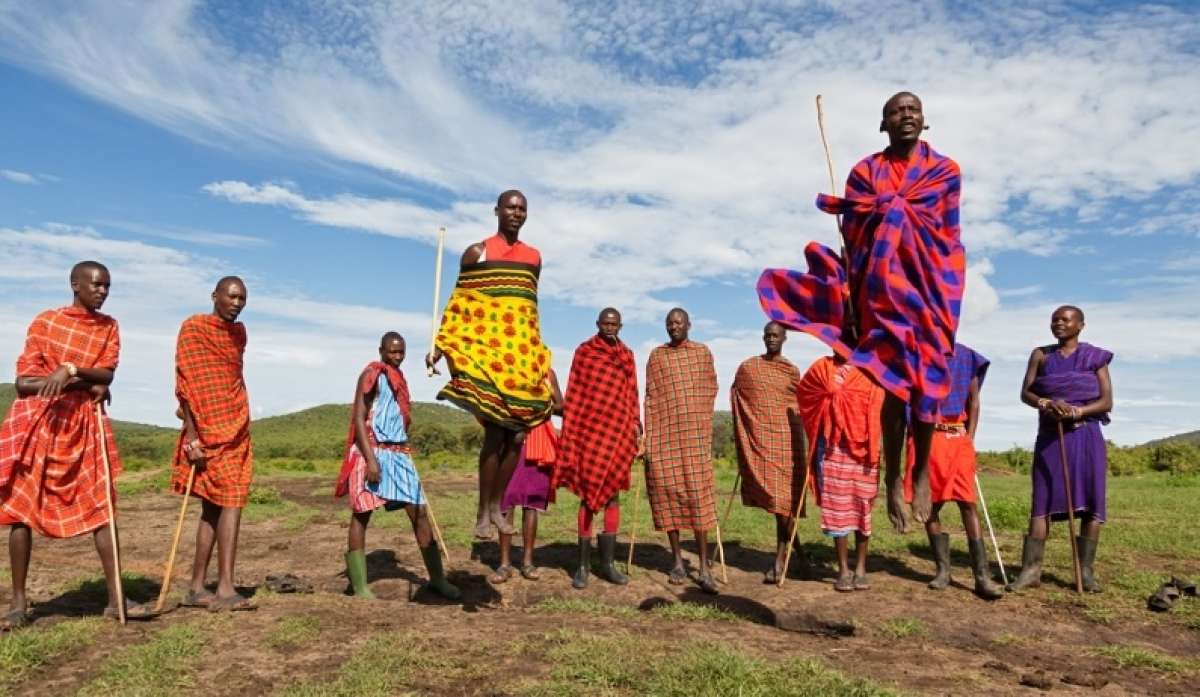
Human history in Africa goes back to our very roots. Fossil evidence suggests a line of development stretching from the appearance of the first primate, Aegyptopithecus (“the dawn ape”), some 33 million years ago, to the presence of Homo sapiens. Current research is focused on the East African Rift Valley, where several discoveries have been made of the earliest hominids (bipedal primates in the human family). Controversy swirls around the exact relationship of the various specimens unearthed, but anthropologists almost universally accept that our ancestors evolved in East Africa. A fully upright hominid left its unmistakable footprints in an ash – filled river – bed near Tanzania’s Oldupai Gorge some 3.5 million years ago. It is not certain what species was responsible for the humanlike tracks. A likely candidate is Australopithecus afarensis, of which a 3 – million – year – old specimen (the celebrated Lucy) has been discovered in Ethiopia. The more recent fossil record goes on to reveal larger- brained species: the first tool user, Homo habilis (“able man”) and the more refined Homo erectus (“erect man”). They lived at least 1.6 million years ago at both Oldupai and Lake Turkana in Kenya. The earliest Homo sapiens (modern man) are believed to have made their debut no more than half a million years ago. At this point, no one knows where we first appeared, but the betting is heavy that our species was born in Africa. The most ancient of Africa’s present – day ethnic groups are the Pygmies and the Bushmen. The Pygmies still live in the equatorial forests of the Congo basin, while the Bushmen have been exterminated from the high Savannas of Southeastern Africa and are now found only in the KALAHARI DESERT. Both groups lived as hunter – gatherers, totally adapted to their respective environments. For millennia, they survived in small bands, wandering as the seasons and food source, required. Of course, blacks are the dominant ethnic group in sub – Saharan Africa today. Their geographic origins are obscure; very possibly they came from North African regions that are now abandoned to the Sahara. The hunters who appear in the Saharan rock paintings of some 5,000 years B.C. were NEGROID, as were the cattle herders who replaced them. It seems likely that with the great drying out of the Sahara, those black groups moved southward. Iron tools enabled them to penetrate the equatorial forest regions, although their conquest of the forest was limited by the nature of the environment: their cattle succumbed easily to disease spread by tsetse fly. The black immigrants adapted by cultivating cassavas, yams, and bananas. They built the walled towns of Benin and Ife in the Nigerian forests, where sophisticated artisans created exquisite sculptures in bronze. In the West African Savannas, city – states –the ancient, pagan Ghana and the later Muslim Timbuktu – grew into commercial empires that controlled the exchange of the forest’s ivory and gold for salt from the desert. The ancient black tribes of West Africa spoke many languages, but one language group in particular – the BANTU – were spectacularly successful in their expansion throughout sub – Saharan Africa. Bantu – speaking tribes spread through the tropical forest zone, and eventually reached the high plateaus of EAST AFRICA, from which they moved southward, almost to the Cape. The Bantu came to dominate the Pygmies of the forest and displaced the Bushman – like hunters from the East African plains. There they encountered other strong tribal groups penetrating from the north. The Bantu herded cattle where they could, but they depended on farming for survival. They introduced agriculture to the forest region and spread the cultivation of millet as they moved into the open Savannas of the east. Two other important tribal groups moved southward with the retreating Saharan Savannas. From the upper reaches of the Nile came the NILOTES. Tall, thin – boned pastoralists, they penetrated the grasslands of the Sudan region and the open country of East Africa. Noted for their regal bearing, prowess at war, and aristocratic condescension toward other peoples, the cattle – herding Nilotic nomads are today personified by such well – known tribes as the Maasai of Kenya and Tanzania, the Watutsi of Rwanda and Burundi, and the Nuer and Dinka of South Sudan. Black Cushitic tribes, speaking languages related to those of their Semitic neighbours in Arabia, occupied the HORN of Africa. After the collapse of the Roman Empire and the rise of Islam, European contact with Africa was limited by centuries of warfare with the Arabs of the Mediterranean coast.
Geographic knowledge was reduced to what could be gleaned from the works of classical Greco – Roman texts. Meanwhile, the Arabs were learning about the continent and peoples to their south: throughout the Middle Ages, they carried on a brisk trade with the tribes of the Horn of Africa, and sent maritime expeditions down the eastern coast. By the tenth century, they had founded a string of towns along the Indian Ocean. These trading outposts eventually developed into the lively city – states in which the Swahili culture of East Africa evolved, and from which the European explorers later set off to “discover” the Africa hinterland. The Arabs also succeeded in Islamicizing the tribes of the Sahara. Their camel caravans then carried Islam across the great desert to West Africa, where many of the tribes of the Guinean savannas adopted the faith of Mohammed: the most important of the West African trading empires were Muslim. Arab commercial and cultural influence in black Africa was firmly established centuries before the first European contacts. While Arab geographers had a fairly sophisticated view of the continent, their European counterparts hardly knew that Africa existed. Europeans prized the tale of a great African king, Prester John, who ruled a Camelot – like Christian Kingdom somewhere beyond the realm of the hated Muslims. The European discovery of Africa began with the voyages of the seafaring Portuguese during the fourteenth and fifteenth centuries. Slowly the Iberian mariners extended their voyages down the Atlantic coast, until Bartholomew Diaz finally rounded the Cape of Good Hope in 1488. He was followed shortly by Vasco de Gama’s exploration of the Indian Ocean coast as far north as the Arab towns of Mombasa and Malindi in present day Kenya. Throughout the “ Age of Exploration, while sailors of a dozen European nations were charting the world’s oceans and opening up new lands for colonization, European ships also plied the coasts of Africa. Offshore islands were colonized and a few fortified towns founded on the mainland. These posts were meant to supply the fleets cruising to their lucrative East Indian Possessions. The African hinterland was deemed too dangerous to explore, and was not thought worth the risk. Its wealth – ivory and especially slaves – was exploited by proxy. Only a few missionaries and explorers bothered to penetrate the interior.
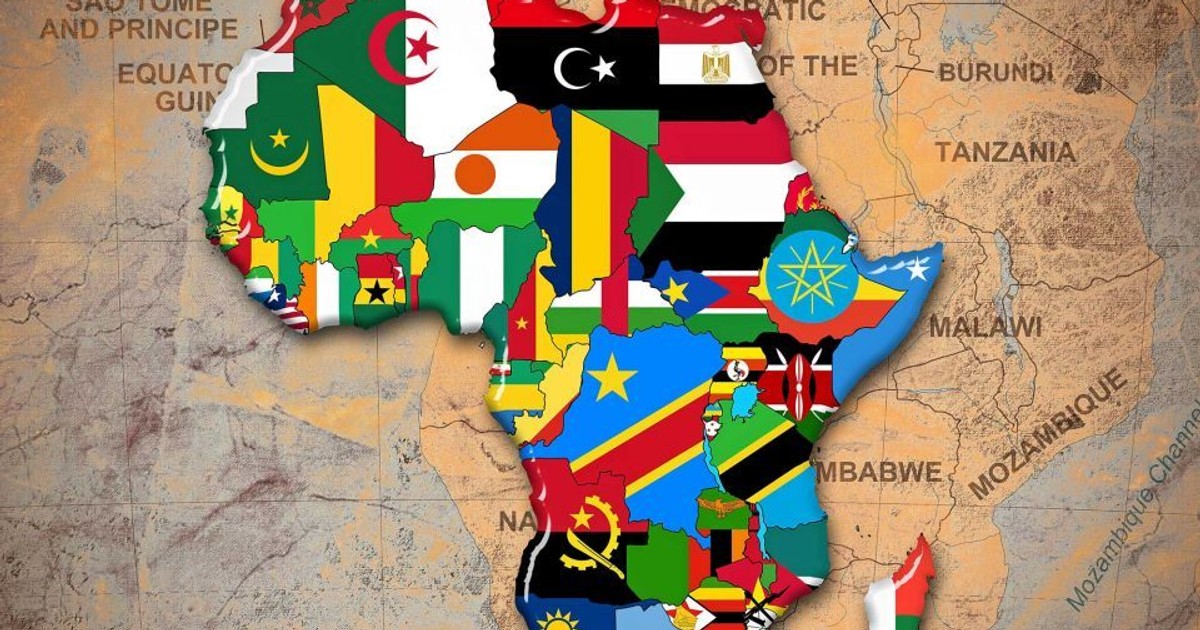
With the exception of the establishment of the Dutch colony at Cape Town in 1652, which was to have lasting significance for the history of the continent, no real attempts were made to colonize Africa until the last century. Yet the Age of Exploration, with its discoveries and exploitation of new lands, had profound effects on the African interior. The colonization of the “New World”, particularly the development of plantation agriculture in the American tropics, required the importation of huge numbers of slaves. As the native “Indians” of the Caribbean died off wholesale from epidemics of smallpox and measles, they were replaced by Africans, whose bodies already had some immune resistance to those killers, and blacks soon became the only source of slave labour. Over a period spanning almost four centuries, an estimated 10 million Africans were carried into bondage in the Americas. The social disruption and suffering caused in Africa by the constant depredations of slaving expeditions is incalculable. Most of the slaving look place in West Africa. White traders preferred to buy slaves at their coastal enclaves, such as Goree Island in Senegal. The business of catching slaves was left primarily to African allies, who received firearms to make their job easier: some coastal tribes grew rich and powerful by transporting the people of the interior to the sea for sale to European buyers. The importance of the Savanna empires dwindled as trade shifted from the Trans – Saharan caravan routes to the European enclaves on the West Coast. In East Africa, Arab slavers organized their own slave – catching expeditions. They forged a system of inland caravan routes that were later to become the highways of the European explorers. In the beginning of the nineteenth century, Europeans became interested in unraveling the geographical mysteries of Africa. Their maps delineated only the outlines of the continent with any degree of certainty; the interior was left “dark” signifying terra incognita. Ironically, it was a new – fledged European passion for suppressing the slave trade that spurred Livingstone’s celebrated explorations in southern and eastern Africa. The quest for the sources of the Nile then led to the expeditions of Burton, Speke, and Grant. As the dark spots on the map filled in, the scramble for colonies began in earnest. King Leopold of Belgium hired Henry Morton Stanley to carve an empire out of the Congo, while Cecil Rhodes pushed his dream of a Cape – to – Cairo British domain. French and British administrators began to exert control over interior regions far from their coastal enclaves. Rivalries among the European nations played no small part in the final division of the continent. When BISMARCK suddenly declared German protectorates in Africa, he did so more to obtain bargaining chips against his military rivals than out of genuine interest in empire building. At the Berlin conference of 1884, Africa was entirely parceled out among the great powers. The colonial era had begun. The colonial partition of the continent was to have lasting effects on Africa’s political and economic development. The lines drawn on the new map of Africa did not reflect any ethnographic or economic rationale for the creation of future nations. Arbitrary borders divided some tribal groups from their closest relatives, while throwing others together with traditionally bitter enemies. Unified regions were sundered, migration and trade routes cut off. Later, these whimsical colonial boundaries were to harden into the inviolable borders of sovereign nations, setting the stage for the political and economic fragmentation that is a major stumbling block to Africa today. The theory and practice of colonial administration differed under each of the European powers. In some of their protectorates, the British established a system of indirect rule: local rulers were made representatives of the crown, and remained in nominal control as long as they did what they were told. Colonies such as South Africa, Rhodesia, and Kenya, where good land and pleasant climate attracted the immigration of white farmers, were given much higher degrees of true self – rule. France and Portugal treated their colonies as overseas parts of the mother country. The French in particular created centralized administrations modeled after their government at home. They also practiced a policy of acculturation toward their African subjects; they encouraged a well – educated African elite to adopt the French way of life and thought. The European governments that established colonies in Africa did so with economic as well as political motives. They desired minerals, agricultural products, and markets. Naturally, the justification for empire building was more high – minded: the Africans were to be brought out of savagery through economic development and the spread of Christianity. For the supposed beneficiaries of colonialism, the cost proved high. The Africans not only bore the psychological pains of cultural upheaval and racial discrimination, but they also had to endure the physical suffering of forced labour and the horrors of war when they dared to resist. And there was certainly resistance, as is recalled by the glory – filled accounts of colonial military campaigns against the Zulu, Herero, and Maji Maji. But resistance was futile against the superiority of modern arms. The Europeans soon turned their sophisticated weaponry on each other. Africa became a battleground during the First World War, and bush fighting raged there until the conflict’s bitter end. When the smoke cleared in 1918, Germany had lost all its colonies. Those were parceled out among the victors, to be administered as Mandated Territories under the aegis of the League of Nations. The budding demands of Africans for self – rule were temporarily ignored, and the period of peace that followed was one of quiet colonial development. Roads were built, cash crop economies instituted, public health conditions improved, and, in most areas, educational opportunities for Africans expanded. The renewal of European fratricide in the Second World War sounded the death knell of colonialism. The seeds of education and development that colonial activities had planted bloomed into national independence movements on all sides. African leaders like Kwame Nkrumah and Jomo Kenyatta voiced the cry of freedom. They were jailed for their efforts, but even from inside they raised the expectations of ordinary Africans that freedom would come. At the war’s end, the European countries attempted to resume business as usual in their colonies, but were too exhausted to contest militarily all the national movements that confronted them. Nor was there public support at home to fight to keep the colonies. There was some violence – notably the Mau Mau Emergency in Kenya and, much more bloodily, the Algerian War of Independence – but for most British and French colonies, freedom was granted without protracted bloodshed. In 1957 Ghana became the first black African nation to gain its independence. The next decade saw a flood of new nations, and by 1967 only Portugal’s African empire remained intact. In 1975, after protracted guerrilla wars, Portugal granted independence to its possessions, Angola and Mozambique. The white settlers of Rhodesia proclaimed unilateral independence from Britain, while they confronted black independence forces on the battlefield. With the attainment of black majority rule in 1980, Rhodesia became Zimbabwe. Africa’s post-independence era has been difficult.
The first years were filled with an optimistic idealism that looked toward a bright future of self – determination and economic development. In reaction to the century of foreign domination, a wave of anti – European feeling swept over the African intellectuals who became the leaders of the new nations. The appeal of Marxism, with its call for the rapid development of egalitarian economic systems benefiting the masses, was irresistible on a continent where most people eked out a life of subsistence agriculture. The Soviet and particularly, Chinese socialist models attracted many African leaders. Some countries, notably Ghana and Tanzania, became extremely anti – Western and looked to the communist world for assistance. Most of the new nations, however, while jealously guarding their nationalist prerogatives and often anti – Western in political rhetoric, turned to the West to fund their economic growth. To the new nations, rapid development meant the creation of large – scale modern industries, and massive projects involving the building of dams and factory complexes were begun. These grand schemes required huge influxes of foreign capital. Many programs looked impressive, but were ill conceived or mismanaged, and did little good for the overall economy. A continual need for further funding started the drift toward permanent debt and dependence on Western aid. The African elites who became national leaders were idealistic but inexperienced. Although mismanagement of development schemes became commonplace, inexperience had its most disastrous effects in the political sphere. The tendency throughout the New Africa was for the creation of one – party states in which no serious opposition to the government was tolerated. Inept officials or economic managers were protected from criticism or replacement, while poorly planned or mismanaged development projects became institutionalized white elephants. As some economies foundered through stagnation, others were floodedwith foreign and money. The temptation for corruption was often overwhelming; in some countries, bribery became a standard of doing business, and black marketeering a way of life. One – party rule usually resulted in one – man rule. The leader and his loyal followers often enriched themselves, sending huge sums of money into the safety of Swiss bank accounts. As political power became the road to wealth, and as constitutional change was impossible, the coup d’état became the principal means of changing the government. Although each coup’s leaders could point to the excesses and failures of their predecessors as they announced high – minded goals for reform, too often they fell into the same habits of self-enrichment. The cycle of coup and countercoup became a regular feature of African politics. Pointing to the mistakes and failures of the recent past, some argue that independence came too soon, that the Africans were not ready for nationhood because they had neither the institutions nor the expertise to govern themselves efficiently. Others excuse every problem by placing all blame on Africa’s colonial past. Although neither side has a monopoly on truth, few black Africans would argue that the gains of dignity and self – determination do not overshadow the record of political excess and economic woe. There have been marked advances in public education, and a general increase in services due to the construction of roads, hospitals, water projects and the like. Overall, the material quality of life for the average African has probably improved over the years of independence. The prospects for a brighter future depend on the willingness of both the African governments and the international community to tackle serious economic and environmental problems.
UNDERSTANDING AND LEARNING ABOUT THE AFRICANS
Colonial domination by European civilization had a tremendous impact on Africa’s materially primitive societies. From the first contact, Africans started to adopt the technical innovations that were to revolutionize their lives. Fancy trinkets and better tools were the first, irresistible lures. Later, the introduction of monetary economies advanced modern institutions at the expense of traditional values and customs. But the habits of generations were not easily shed, especially among the uneducated. Native culture adapted and endured, synthesizing technological methods with ancient social structures. It is not surprising that the result is a society fraught with contradiction and paradox. Today, Africans live with this awkward synthesis of old and new cultures. Although leaders strive for rapid technological development and the masses readily accept the material benefits of modern city, African society nevertheless remains essentially conservative and traditional. Within the framework of national identity, Africans are bound by tribal loyalties that determine the social fabric of their lives. The family, extending far beyond Western concepts to include distant relatives within the larger clan and tribe, is the center of the individual’s existence. Through family and tribe, a complex web of social obligations gives the individual identity and security from birth to death. While governments struggle to develop modern economies, the vast majority of Africans remain subsistence farmers, tied to tribal homelands that they divide and farm according to the customs of their forebears. A man’s wealth is often measured by the number of wives or head of cattle he possesses; a woman’s status, by the size of her dowry and the number of her offspring. Although the strength of traditional religions (often condescendingly referred to as “animist” continues to be eroded by Christianity and Islam, the evangelical religions are often grafted onto the old. This fusion allows Africans to retain customary practices (including sorcery and polygyny) that would otherwise be considered unorthodox or heretical. Africa’s contradictions are reflected in the lives of its people. You could meet a modern Kenyan man in Nairobi, and readily learn that he is an educated Christian, holding high degrees and an important government job. But you might fail to discern that he regards himself as a Kikuyu, that he has several wives at his home shamba, and that he derives as much status from his tribal landholdings as from his modern business enterprises. Although he would not be the “typical” African, his position with roots in two worlds would not be at all unusual.
African women have a much harder time straddling the line between the traditional and the modern. A country woman who goes to the city to find work, but gets pregnant, may no longer be welcome in her former home if her potential to bring in a bride price has evaporated. In addition to native cultural barriers, well – educated women must deal with the same workplace biases and role conflicts experienced by their Western counterparts. Of course, the pace of social change in Africa is accelerating rapidly. The growth of the state is supplanting tribal identification with national loyalties. Political and state ideologies challenge both ancient customs and modern churches. Most importantly, changing economies threaten the security of the extended family system as Africans migrate by the millions into cities. They trade the boredom of rural life, which offers little but the security of strong family ties in an environment of hard – working poverty, for the excitement of the city and the hope of better economic conditions. Such hopes are more often frustrated than realized, but the life of the village – slow, traditional, and dull – is ridiculed by the growing class of city dwellers. It would be a mistake to think of Africans as a homogeneous mass. Tribal, religious, and class differences factionalize the population of each country, not to mention that of the continent at large. Nor should we forget that not all Africans are black. The continent’s other racial groups are relatively few in number, but have tremendous influence on their societies. Generally higher on the economic ladder and better educated, the nonblack Africans form distinct subcultures that are interesting for both their unique lifestyles and their points of view. Many whites call Africa home. Known as Mzungu in Swahili, they are also often referred to generically as “Europeans” – a source of some confusion to Americans. (Asians are not considered white in Africa.) In black – ruled Africa, whites are divided into two distinct groups; the colonial remnants and the expatriates. In most former colonies, some whites stayed on after independence. Those who could not accept black rule immediately packed up for their mother countries or moved “south’’. In socialist countries, later attrition was caused by the breakup of private landholdings and the strangling restrictions of controlled economies. But in countries such as Kenya, the whites who remained did very well. Their efficient farms became the mainstays of domestic food production and the chief earners of foreign exchange through export crops. Whites often came to dominate the tourist industry as hoteliers, tour operators, and guides. In parts of western and central Africa, whites from the colonial countries, as well as Greeks and Lebanese, still form the commercial class, keeping small shops that dominate retail trade. The old colonials and their heirs are an interesting group. They speak the native languages and are often well versed in local customs and lore.
Among them are individuals with an extraordinary knowledge of the African wild. Although some colourful characters among them long for the “good old days,” most have adjusted themselves to black rule and have deep affection for their countries. They have lost all political power, but have by and large maintained their economic well – being. The expatiates arrived in the wake of independence. Sponsored by the United Nations and various private or governmental agencies, they continue to flock into Africa to lend technical assistance for development. Where foreign companies are allowed in, they also bring managers and technical experts to see that their subsidiaries are well run. Most expatriates come on two – year contracts, signing on for perhaps one renewal. They are generally well paid, and often receive free housing and cars as well as special privileges. It is not an unattractive life, because the salary and perks allow a standard of living (including servants and child care) that would be beyond their reach in their home countries. Yet most of them remain outsiders, cloistered in a country club existence, well removed from interest in either the local people or the land. The more adaptable among them become permanent residents in their adopted countries, and those with a keen appreciation for the bush often find their way into the safari business. The community of wildlife researchers comprises another small but distinct subculture that is sometimes encountered in the most out – of – the way places. Researchers are not generally friendly to tourists, however: some treat all visitors, no matter how well informed, as idiotic interlopers into their private domain. Naturally, they resent interference in their work. Avoid research facilities; they are off limits to all but known financial backers. Missionaries are still active in Africa, too. It is not rare to find clerics or missionary doctors working in extremely remote outposts. Although they do not much concern themselves with tourist activities, some missions sponsor crafts shops or rent accommodation to visitors. In East Africa, the large community of Indians – locally dubbed “Asians” – is very influential. They were originally brought over from the teeming Indian subcontinent by the British, to perform coolie labour on the first railroad construction projects. They stayed on after the railways were completed and found their niche as shopkeepers. At that time, the British were primarily interested in the more gentlemanly pursuits of farming and ranching, while the blacks were still too new to the ways of the modern world to compete in business. The Asians prospered and have come to dominate commerce in East Africa. But they have remained factionalized along the ethnic and religious lines of India: the Muslim, Hindu, and Sikh communities do not socialize much or intermarry with each other, and do so much less with the native Africans. Although many are citizens of the various African countries (other hold British or Indian passports), they are nonetheless insecure. Caught between the former white overlords and the African masses, the Asians have never attained any political power, and their economic success has engendered a lot of bitterness on the part of poor blacks, which is easily exploited by demagogic politicians. The Asians are often blamed for black market dealings, while their managerial contributions to the economy are ignored. The various Asian communities, together with the people of Arab descent along the eastern coast, are interesting additions to East Africa’s cultural brew. Their colourful costumes, temples and mosques, and excellent cuisine should not be overlooked. Considering Africa’s history, racial prejudice against whites is not the problem it could be. Many white Americans are ill at ease when first arriving: they bring their home – grown fears about visiting poor black ghettos. Yet once in Africa they quickly lose their fear, for though everyone on the street is black, the racial hostility common in American cities is absent. That does not mean that racial tensions never surface. In colonial Africa, and in some circles even today, it was quite common for blacks to be treated as nonpeople: they could be talked about, or even openly disparaged, just as if they were not present. After decades of both overt and subtle abuse, Africans have become sensitive to insult when they perceive that they are not being acknowledged as equals. Few people make an issue of race, but as everywhere, there are thin – skinned types who are quick to take offense, even where none is intended. Attitudes of anger or frustration are easily aroused in visitors who are confronted with apparent inefficiency or bureaucratic delay during such routine transactions as changing money or checking in for airline flights. In those situations, a perfectly innocent remark can cause an unpleasant incident. Africans do not respond positively to anger on the part of whites, and pushiness is despised. As a rule, black Africans are very friendly, and smiling curiosity about foreigners is more common than not. Country folk are almost invariably polite. Take a walk on any road in East Africa, and a friendly “Jambo” will welcome you from every person you pass.


