
OLDUPAI AND LAETOLI (The origins of mankind)
Background information fact: by edgardowelelo@yahoo.com, Master of the Game
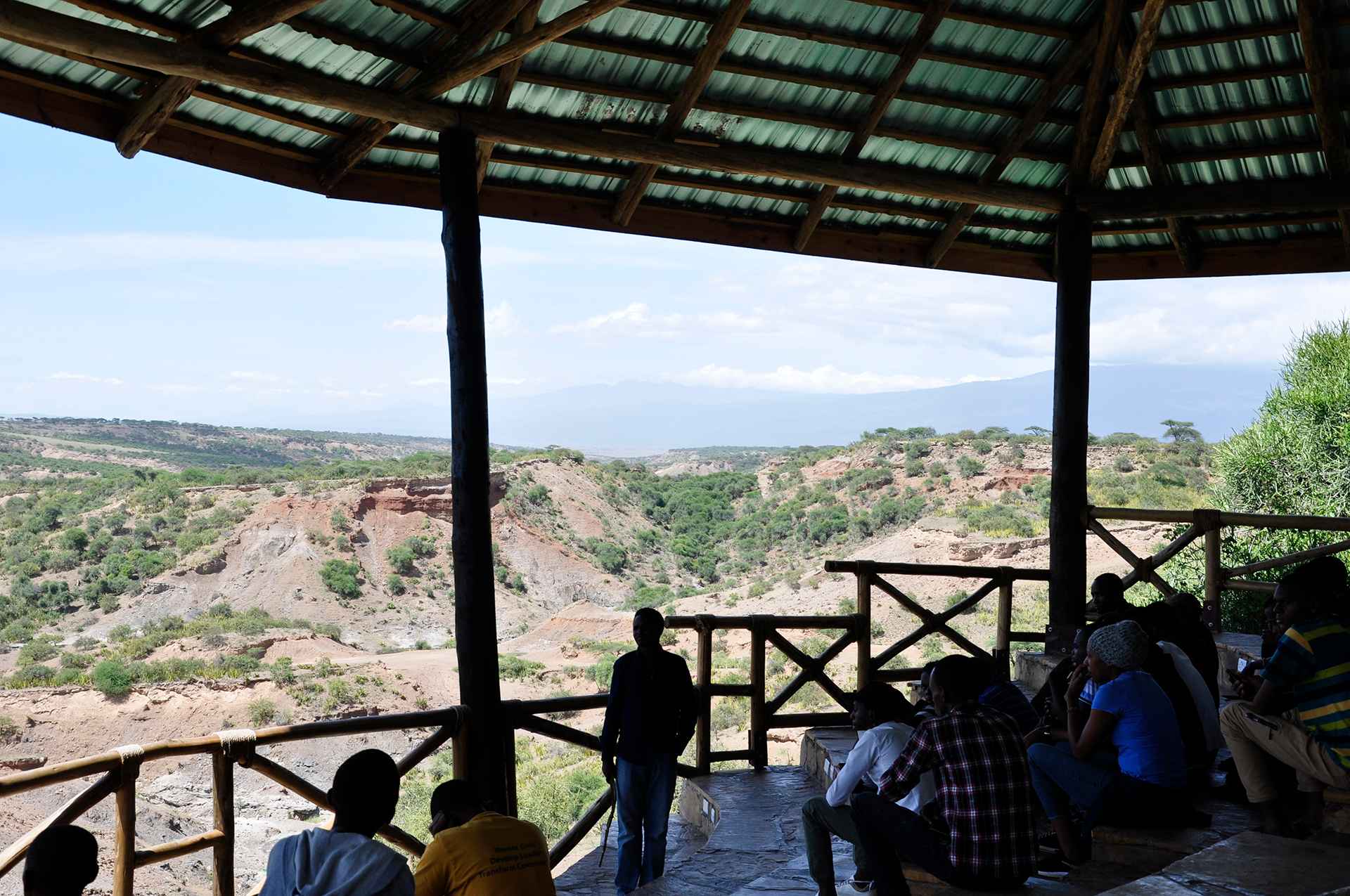 There has been much public debate for several decades over the original home of MODERN MAN, and it is now generally agreed that the cradle of human life was in EAST AFRICA. This picture is based on fossils discovered around the GREAT RIFT VALLEY, one of the most important archaeological sites being the OLDUPAI GORGE in the Ngorongoro Conservation Area Authority (NCAA). The name of the gorge has been widely quoted in the form ‘’OLDUVAI’’, but the original name is ‘’OLDUPAI’’ as given to it by the Maasai, meaning ‘’wild sisal’’. Another significant archaeological site in the area is LAETOLI, around 40 km southwest of Oldupai. The formation of fossils is an extremely long process that must take place under highly specific conditions.
The first phase in the process is creation of the fossils, suitable conditions for which evidently existed at Oldupai, while the second phase is their exposure for discovery. At Oldupai this was a consequence of movements within the earth’s crust, which tilted the area to create new drainage patterns and caused a seasonal river to cut the present gorge through the layered beds of sediment, making it possible for archaeologists to find signs of life dating from ancient times.
The first European to realise the special nature of OLDUPAI was the German professor and lepidopterist Wilhelm Kattwinkel, who took some fossils he found at Oldupai back to Berlin in 1911. These remains inspired a German geologist, Hans Reck, to organize the first expedition to Oldupai in 1913, leading to the discovery, among other things, of a fossil of modern man, Homo sapiens. The beginning of the decades of systematic excavation work in the area may be traced to 1931, however, when a Kenya – born prehistorian, LOUIS LEAKEY, launched his programme of studies in the gorge, accompanied initially by his first wife, FRIDA and later by his second wife, MARY.
 There are in fact seven (7) superimposed sediment strata visible in OLDUPAI GORGE, representing different periods in time on a scale stretching from 1.9 million years ago to the present day. Thus fossils of modern man, Homo erectus (‘upright man’), Homo habilis (‘’handy man) and an early hominid, the robust, Australopithecus boisei, have been discovered at Oldupai in the course of years. Signs present in the lowest layer (dating from 1.8 – 1. 65 million years ago) provide some evidence of the first Palaeolithic tool culture, characterized by choppers and bifacial chopping tools, which strongly indicate that these regions may have been the original home of the first hominids that is the ancestors of modern man.
The fossil hominid tracks discovered at LAETOLI IN 1976 illustrate a brief moment in the life of the early ancestors of the humans around 3.75 million years ago. Some tracks originally caused by a creature walking upright on soft volcanic ash released by the Sadiman volcano are to be found which were most probably made by an early hominid, Australopithecus afarensis. The species was admittedly more ape – like than human, but what distinguished it from the other apes was that it walked on two legs. Even more exciting thoughts were raised by the discovery and comparison of tracks of different sizes, leading to wild thoughts that this combination of tracks might represent a prehistoric idyll of a family, a pair of hominids with a child.
The museum that now stands on the rim of the Oldupai Gorge contains a great deal of information about our ancestral history and the discoveries made in Oldupai and Laetoli. In addition, the animal fossils on display in the museum shed some light on the incredible evolutionary patterns discovered among the animals of East Africa. The gorge itself is open to visitors as well, but the public have not been granted access to the Laetoli site.