
Background information fact; by edgardowelelo@yahoo.com, Master of the Game
These are the last great land wildernesses – the hottest, most arid regions of the world, continually changing, scarred by the wind and alternately baked and chilled. Only the hardiest of plants and animals can survive there, each with a special repertoire of tricks.
Deserts and semi- deserts make up the largest natural landscape on our Planet Earth. Deserts cover almost 50 million sq km (19.3 million square miles), just over a third of the total land surface, and are expanding every year. Though only too easy to recognize from space, DESERTS are not easy to define. The English word is derived from the Latin desertum, which means abandoned place. A botanist would characterize deserts as large areas without durable expanses of vegetation. A climatologist would say the key indicators are a lack of rainfall combined with high temperatures and subsequent evaporation. But if is not as simple as that. Temperatures in the GOBI DESERT often fall as low as -40°C (-40°F), and the KALAHARI has many trees and bushes. In Europe, People (Europeans) tend to think in terms of the endless sand seas of the Sahara, while in North America, any arid region without agriculture may be called a DESERT. The most useful and widely accepted definition for a TRUE ARID DESERT is a region receiving less than an average of 50mm (2 inches) of rain a year. This designation would encompass the POLAR REGIONS, where at the South Pole, for instance, the annual average precipitation is only 20 – 50mm (0.8 -2 inches).
GLOBAL BANDS OF SAND
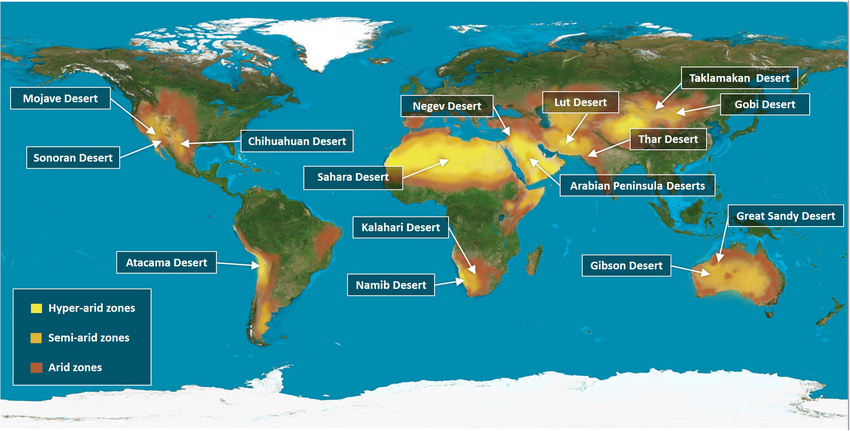
There is a marvellous symmetry to the distribution of the world’s deserts. Most of them lie in two globe – circling bands centred on the tropics of CANCER and CAPRICORN. In the north you find the deserts and semi – deserts of NORTH AMERICA, the vast expanse of the SAHARA- the largest desert in the world, covering about the same area as the US – the ARABIAN DESERTS and the CENTRAL ASIAN DESERTS. In the southern hemisphere, there is the ATACAMA in Chile and the semi – desert of PATAGONIA, the NAMIB and KALAHARI in Africa, and the deserts of Australia – the driest of all the inhabited continents, with 80 per cent of its total area either arid or semi – arid. All these deserts are found along the edges of the TROPICS, mainly because of the way the Earth’s atmosphere circulates. The atmosphere operates as a kind of heat machine, kept in continuous motion by solar energy. At the EQUATOR, the sun is always vertically overhead, and so the regions around the EQUATOR absorb most of the solar radiation that reaches the Planet Earth. The air above the land warms, expands and rises, carrying with it vast quantities of water vapour from the warm tropical oceans. As it rises, it cools, loses its buoyancy and spreads laterally north and south. Cooling reduces the air’s ability to hold water, and the moisture condenses to produce the enormous deluges typical of the equatorial regions. The moisture – stripped air continues to travel north and south and starts to sink. As it sinks, the continuous flow of air starts to compress and warm up again. As a result, all along the TROPICS of CANCER and CAPRICORN, you find parched, warm, high – pressure air at the Planet Earth’s surface. This air and the winds associated with it are the principal reason why most of the world’s deserts are distributed along these two symmetrical bands north and south.
RAIN BARRIERS
Other, more local factors can also create DESERTS. Mountains can force AIR to rise and drop its MOISTURE, creating RAIN SHADOWS on their leeward sides. The great mountain chains of the ROCKIES and SIERRAS influence most of the desert regions of NORTH AMERICA. California’s MOJAVE DESERT, for example, lies in the rain shadow of the SIERRA NEVADA and SAN BERNARDINO MOUNTAINS, which block off the moist Pacific winds. As a result, the MOJAVE has the lowest rainfall of all of NORTH AMERICA’S DESERTS – just 40mm (1.6 inches) of rain a year in DEATH VALLEY, the hottest place on that continent. In South America, the long chain of the ANDES also blocks out RAIN from the PACIFIC, creating the vast semi – desert of PATAGONIA. And the HIMALAYAS keep back the INDIAN MONSOON from large expanses of the TIBETAN PLATEAU, creating desert. The sheer size of continental masses can also play a role. Vast areas of CENTRAL ASIA are DESERTS simply because they are too far from the OCEANS to receive moist air. Surprisingly, some of the driest places on Planet Earth lie within sight of the OCEANS. The ATACAMA in South America, the NAMIB in southwest Africa (Namibia) and the SONORA on the peninsula of Baja California are all deserts created by a close proximity of cold ocean currents. They have all developed along the western coastlines of their continents, where the prevailing winds tend to blow offshore, pushing surface water out to sea. This surface water is replaced with cold water drawn up from the depths, and any moist air crossing these stretches of frigid water is chilled. The moisture condenses out at sea as RAIN or forms dense banks of fog along the coast. Little or no rain ever makes it inland to the thirsty desert. This is why the ATACAMA, for example, is the driest desert on Planet Earth. Over the course of time, the average rainfall has been 1 – 5mm (0.04 – 0.02 inches) a year, and in places, it has seen no rain for years. Considering that the long, thin strip of the ATACAMA starts in PERU just 400km (250 miles) south of the EQUATOR, in a region where you would expect permanent tropical moisture, it is clear how important a role local factors can play in DESERT CREATION.
THE HOTTEST LAND OF ALL
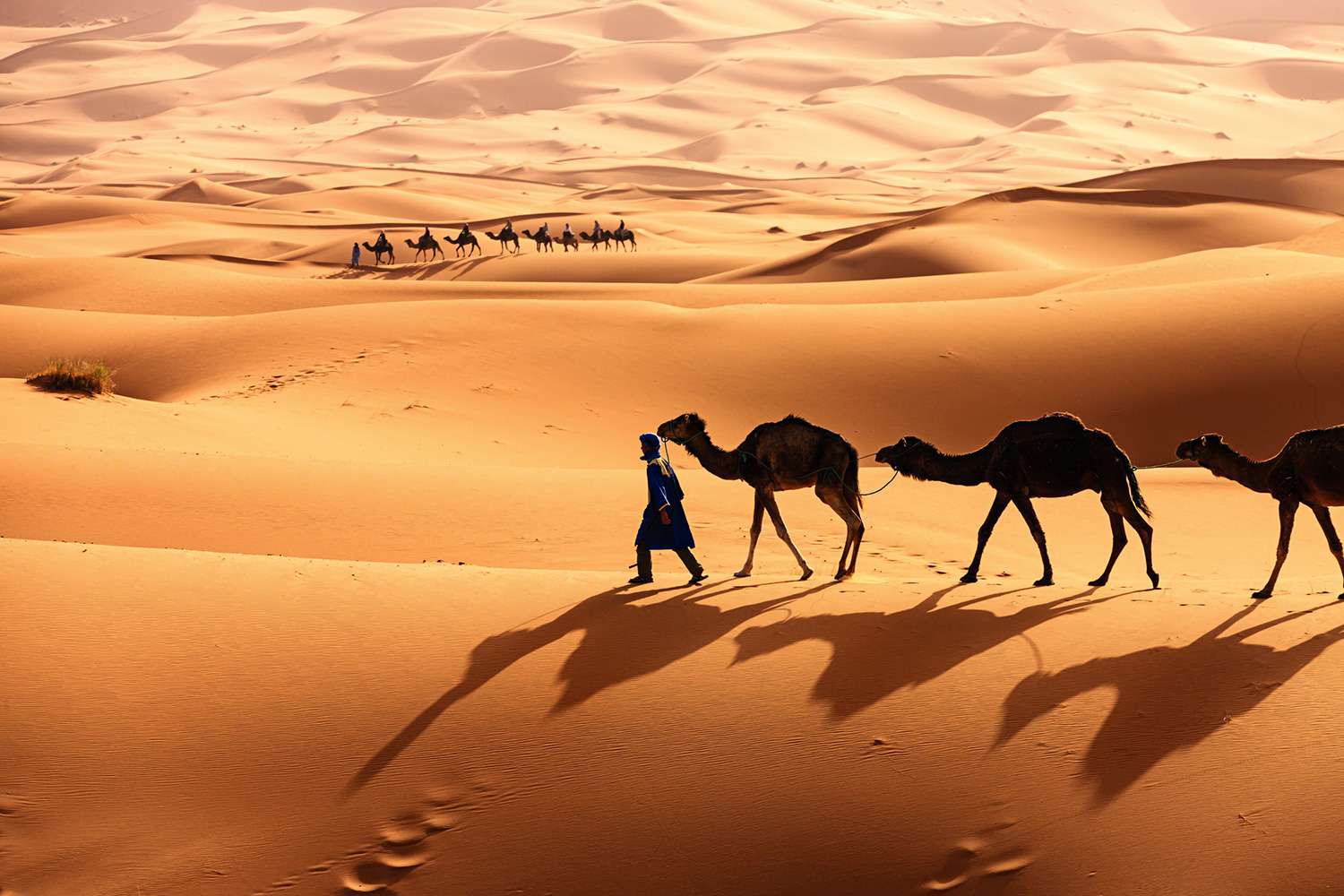 DESERTS are the hottest environments on the Planet Earth. With so little cloud cover, the sun can regularly heat the deserts to a searing 40°C (104°F) and, in some cases, up to 50°C(122°F). But that is just the air temperature. On the sand and rocks, temperatures of up to 75°C (167°F) could burn your feet. Even people used to that kind of heat find it difficult to spend much time in the midday sun. The Tuareg people of the Sahara and the Bedouin of the Arabian deserts – all desert people – have long known that protective headwear is essential and choose to travel only in the relative cool of the early morning or late afternoon. And the hottest place on Planet Earth? There is dispute about the accuracy of recording methods, and some claim the record should go to DEATH VALLEY in California, where in July 1913, a temperature of 57°C (135°F) in the shade was measured. But the generally accepted record holder is EL AZIZIA, in LIBYA, where an incredible 57.8°C (136°F) in the shade was recorded on 13 September 1922. Taking deserts as a whole, the low – lying southern Sahara is the hottest desert on the Planet Earth, while the GOBI DESERT is the coldest and is covered in snow for two months of the year. The Gobi’s winter temperatures may drop as low as -40°C (-40°F) but reach more than 40°C (104°F) in the summer.
THE SCULPTING FORCES
Water and wind work their erosive ways more violently in deserts than in any other environment, and their combined forces have created some of the world’s most spectacular scenery. Without the protection of trees and bushes, erosion from the baking sun, cold nights and strong winds have laid bare the bones of the Planet Earth. Generations of desert explorers have been unable to resist the call of these wild and pristine landscapes. Even today, when camels have been largely replaced by vehicles, desert travel remains a special experience. Almost every week, a few ancient lorries leave Timbuktu in Mali and head north across the Sahara. They are carrying sheep to sell in the markets in southern Algeria. It is a grueling five – day crossing, which they then repeat with a cargo of dates to sell in Timbuktu. Hitch a lift on one of these lorries, and you can experience the whole range of desert scenery. Soon after leaving Timbuktu, you cross a wide, flat pavement of small rocks that have been worn beautifully smooth by the wind. This is the reg desert characteristic of much of the southern Sahara. If you are lucky, you might then pass groups of tall, rock pillars that break up the monotony of the endless flat horizon. It is only after three or four days of hard driving that you finally reach the sand – dune scenery everyone expects to find the deserts. These massive dunes of southern Algeria’s sand sea dwarf the lorry and are impossible to cross without the broad feet of a sure -footed camel.
SAND SEAS
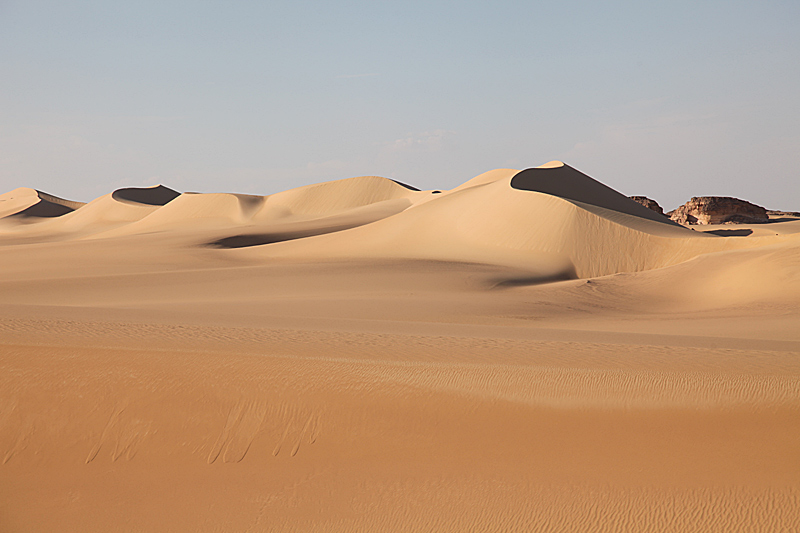 Even in the driest deserts, tiny amounts of water are present in rock. Wildly fluctuating desert temperatures continually freeze and thaw this water. After being baked and frozen like this for thousands of years, even huge rocks break down into smaller and smaller fragments until they eventually blow across the desert as grains of sand. Blasted by the power of the wind, thrown against cliffs and rubbed against each other, grains become rounded and coated with a red polish of iron oxide. As the sand particles continue to flurry across the landscape, they gather in piles – sand dunes – which today cover up to 20 per cent of the world’s deserts. Sand dunes are surely the most evocative features of a desert landscape. Powerful winds blow the sand into some of nature’s most beautiful fluid sculptures, ranging from small heaps to rolling mountains of sand more than 300m (984 feet) high and several kilometers ( a mile or more) long. Large groups of them form the beautiful, undulating landscapes known as SAND SEAS – vast expanses of sculpted sand rippling away to the horizon. The largest SAND SEA on the Planet Earth is the RUB’AL – KHALI, or EMPTY QUARTER, on the ARABIAN PENINSULA. It covers 560,000 sq km (216,220 square miles) – an area larger than France. Differences in local wind patterns and the supply of sand produce various types of dune systems. The most common are the linear dunes that form in a series of parallel lines, like so many waves coming into the coast. Linear dunes are typical in Australian deserts and include the longest sand dunes in the world – the 300km (186 mile), parallel, red sand ridges of the extraordinarily beautiful SIMPSON DESERT in South Australia – the continent’s driest region. The majestic sand dunes of the SOSSUSVLEI SEA in the NAMIB DESERT(NAMIBIA) also stretch in long lines, but these ever – shifting folds of sand are much higher, forming some of the largest dunes in the world, up to 300m (985 feet) high. Moulded by wind, some of these fluid sculptures slowly creep across the Earth’s surface – many by 10 – 20m (33 -66 feet) a year and some by up to 50m (165 feet) a year.
WIND CRAFT
Wind is a powerful force, especially when carrying particles of sand, and in some places it has created almost alien landscapes. On a small scale, wind – blown sand erodes rocks into beautifully rounded and weathered shapes called VENTIFACTS. On a large scale, wind erosion can carve spectacular rocky pillars and create aerodynamically shaped hills – yardangs. Some of the most spectacular yardangs are found in Egypt’s Western Desert, where a whole chalk seabed has been eaten away into a series of strange shapes. Many resemble giant, white mushrooms, the bottom of the rocky pillars abraded into streamlined, tapered forms. And in Iran’s Dasht – e Lut Desert, the yardangs have been carved into building – like shapes, which the local Iranians call desert cities.
STORM POWER
Nothing transforms a desert landscape as quickly as a massive sandstorm. Seasonal winds pick up huge clouds of sand and dust, blowing them across the deserts, burying villages and blacking out the sky. The few animals that can cope in these conditions have special adaptations, such as a camel’s extra – long eyelashes and long, hair – filled nostrils that can be individually closed. In the Sahara, walls of moving sand can reach more than 1.5 km (a mile) high and are clearly visible from space. The Sahara alone is thought to generate as much as 300 million tons of airborne sand each year, some of which travels as far as GREENLAND and SOUTH AMERICA. This is the world’s largest source of dust and plays a vital role in the global ecology, creating storms in FLORIDA, helping to produce plankton blooms in the Atlantic and even fertilizing the AMAZON.
LIFE IN THE OVEN
For animals and plants trying to survive in the DESERTS, there are two (2) key challenges; lack of water and extreme temperatures. Though they rarely occur in large numbers, a huge variety of different plants and animals – from almost every major group – have become highly adapted to cope with the demanding conditions. Plants have little option but to stay where they are, and so it is hardly surprising that deserts are defined by their lack of vegetation. In the vast wastes of the SAHARA – 9 million sq km (3.5 million square miles) – only 1400 different plant species have ever been identified. And the majority of the plants of the world’s deserts have opted for just two basic strategies. They are either drought – resistors or drought – evaders. The resistors are perennials that are always there, fighting to survive. The evaders are ephemerals, only appearing when the conditions are right.
WATER RETENTION
To hold on to what little water there is and avoid drying up, the drought – resistors have developed a wide range of adaptations. They either specialize in storing water or reducing its chance of evaporation. Typically, they have small, simple leaves with impermeable coatings to minimize water loss or, in some cases, no leaves at all. Living stones, or lithops, in the NAMIB DESERT (NAMIBIA) are an extreme example of this strategy. These plants look like a handful of small, grey pebbles. This conceals them from plant – eaters, but their round surfaces also expose just a small area so that they lose as little water as possible. The roots of desert plants have three (3) main designs; extensive, shallows, fibrous systems that make the best of sudden and unpredictable desert rainfall: bulbs that store water underground: and deep tap – roots. Most desert shrubs and trees are small or squat with extensive root systems, tapping into groundwater far below. For many years there was a solitary acacia tree in the SAHARA that acted as a famous landmark for camel trains and travellers. When this lonely sentinel finally died, its roots were discovered to have reached a depth of 35m (115 feet). Other desert trees such as MESQUITE and TAMARISK have even deeper roots, which may penetrate as far as 50m (165 feet). The North American CREOSOTE BUSH has a root system that permeates the earth around it so effectively that the plant seems to be able to extract every available molecule of water in its vicinity. No other plant can survive nearby, and even its own seedlings can’t compete for water, which makes reproduction something of a problem. The solution is to colonize nearby ground, not by setting seed but by sending out new stems from near its base on a slowly expanding network of roots. As the bush spreads outwards, the inner stems die away, with the effect that the CREOSOTE BUSH expands into a larger and larger ring, and goes on growing and expanding. One individual has been recorded as being more than 11,700 years old, making it among the oldest known individual organisms on Planet Earth.
SPINY SOLUTIONS
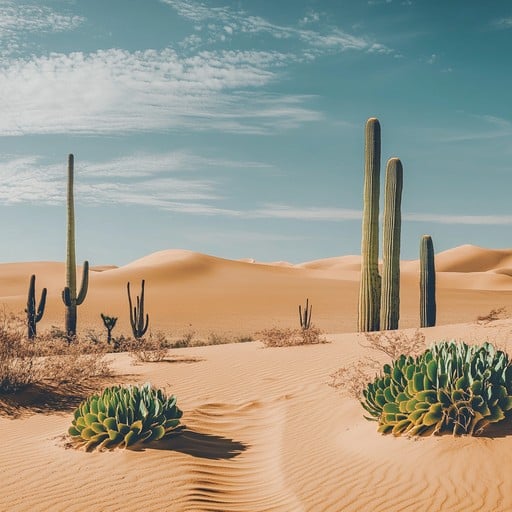 CACTI, the archetypal desert plants, have a shallow, dense, network of fibrous roots that spread over a large area, close to the surface of the soil. These are designed for fast absorption of light rainfall that penetrates the soil only a short distance before evaporating. CACTI have also attempted to solve their water problems by modifying their leaves into spines, greatly reducing water loss and at the same time discouraging grazing animals. Thirsty grazers are such a problem for desert plants that many are either poisonous or have developed thorns and spikes to protect themselves. All of the 2000 or so species of ground – living CACTI are found in the AMERICAS, and their varied shapes and sizes are designed to produce the smallest surface area for any given volume, minimizing water evaporation. A plant’s stomata (pores which plants use to take in carbon dioxide) also leak precious moisture, and so cacti have reduced their size and number. They keep them closed during the heat of the day and only open them at night to take in carbon dioxide. The gas is stored in solution as an organic acid, to be processed during the day, when sunlight makes photosynthesis possible once more. This clever technique of storing carbon dioxide has also been developed by many desert grasses. Perhaps a cactus’s greatest specialization is water storage. North America’s Sonora Desert boasts the largest number and variety of CACTI in the World. Of its 27 species, the most impressive and famous is the saguaro, with its candelabra of towering column – like stems – the symbol of the SONORA. Its stems are made up of a series of pleat – like grooves and can grow for 75 years before the first side branches sprout. In its long lifetime – up to 200 years – a single saguaro may produce more than 40 million seeds, but only one seed is ever likely to reach maturity. This cactus can grow up to 15m (50 feet) tall, weigh more than 15 tons and have up to 50 separate branches. Its extensive root system stretches out as far as it is tall, and in a single day, it can take up a ton of water from a sudden rainstorm. After a succession of these rainstorms, 80 per cent of the plant’s weight may be water. This majestic giant provides a welcome feeding station for all sorts of animals. At night it produces beautiful, large, white flowers that attract pollinating bats. Its flowers and fruit are also a valuable source of food for migrating animals such as hummingbirds and long – nosed bats. Without such feeding stations, many of these animals would not be able to cross the desert.
ANIMAL TRICKS
Animals that survive in the DESERT are in many ways even more remarkable than the PLANTS. Not only do they have to avoid drying out, but many also need to maintain their body temperatures at the same consistent level. Mammals in particular are vulnerable to extreme heat and extreme fluctuations in temperature, and their ability to survive freezing night temperatures can be just as crucial as their adaptations to the searing daytime heat.
ETERNAL LIFE & RESURRECTION
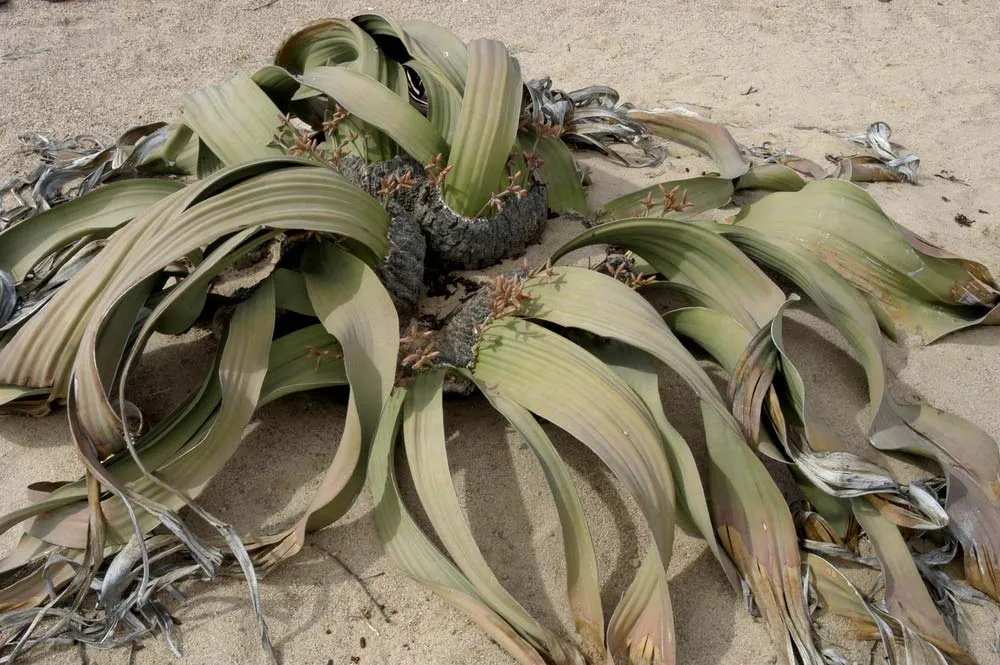 One the world’s strangest plants is WELWITSCHIA, which grows in the NAMIB DESERT(NAMIBIA) and is designed to make the most of the early – morning fog that comes in from the Atlantic coast. Over millions of years, the plant has evolved into what is essentially a huge, swollen, turnip – like base, from which grow just two leaves. But these are monster leaves, which split into long ragged ribbons up to 9m (30 feet) long. This plant may live for more than 1500 years, throughout which time, its leaves continue to grow, fraying away at their tips as they are thrashed in the wind. Despite their ragged appearance, the leaves function as water gatherers. Covered in absorbent fibres that mop up water from the fog, the leaves absorb some water through their stomata and channel the rest of the condensation down towards the centre of the plant and its root system. During extreme drought, some plants simply retreat from life above ground altogether. These geophytes, such as the fragrant, night – blooming cereus, survive below ground using bulbs, tubers, nodules or rhizomes. Grasses do it by developing large and complex root systems. When rain finally appears, these dormant plants are able to grow foliage within days. One extraordinary plant in the ATACAMA DESERT has no roots at all. The airplant Tillandsia latifolia just has stiff, springy leaves arranged in a ball and rolls across the desert whenever the wind blows. This structure is designed to capture moisture when the fogs roll in off the cold Pacific waters.
DESERTS IN BLOOM
The almost overnight transformation of a barren desert landscape into a sea of brightly coloured flowers is one of nature’s greatest conjuring tricks. This is the show put on by plants that have opted for the ephemeral drought – evasion strategy. In effect, they are seeds that occasionally spend their lives as plants – but seeds designed to seize the moment and burst into life almost overnight should the desert be drenched by a storm. Ephemeral species such as poppies, rockroses and grasses are the grasshoppers of the plant world. Generally, there is only just enough seasonal rainfall for the plants to survive, but occasionally the rains are so good that the whole landscape is transformed. Seeds that might have lain dormant in the parched earth for 30 years suddenly germinate. To make sure they don’t blow their chances on a flash – in – the – pan downpour, the seeds have a special chemical inhibitor in their coats that must be dissolved by a good quantity of rain before they can germinate. Their big moment may not happen for years, and so when it comes, they throw everything they have at it, producing large leaves and gaudy flowers. Huge numbers of brightly coloured flowers can carpet a desert in days, but the whole show may be over in just a couple of weeks. The plants aim to be pollinated as fast as possible and therefore produce enormous quantities of seeds. These seeds can lie dormant for many years – those of one desert ephemeral that had been kept in a museum for 250 years were still able to germinate when given water.
THE LAZARUS EFFECT
Good rains and a flush of vegetation can rejuvenate all sorts of life forms. In the Arizona Desert, heavy rain can seem to cause the ground itself to stir. Spadefoot toads that have lain buried and dormant in desiccated mud for as long as ten months kick – start their life – cycle in a matter of hours. As they emerge, they throw themselves into a frenzy of calling, for like the desert flowers, they have only a short time to reproduce before the baking sun will force their offspring back into hiding. Insects such as desert locusts also use the dormancy strategy to survive long periods of drought. Their eggs can survive for 20 years until conditions are right for hatching. Then their numbers explode, producing swarms of biblical size. One recorded swarm covered more than 200 sq km (77 square miles) and was only one of several swarms in the area containing an estimated 500 billion locusts. An individual locust will consume its own weight in food every 24 hours, and so the swarms must keep continually on the move. Travelling at up to 130km (80 miles) a day, a locust swarm quickly exploits the flush of fresh green, and soon the desert returns to an arid wasteland.
IN THE HEAT OF THE DAY
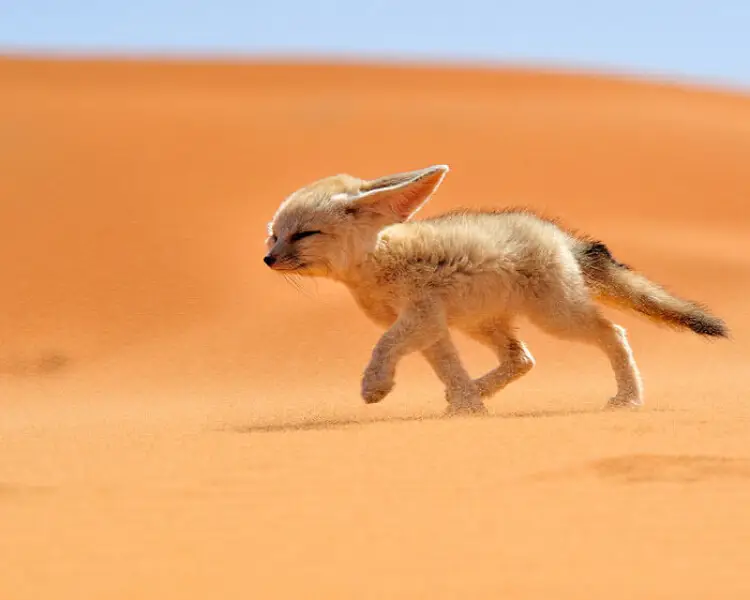 Roasting air temperatures and baking – hot surfaces mean that, for most animals, there is really very little choice except to avoid the day altogether. This is where it helps to be small. Even within a few hours of sunrise, most sandy surfaces are already burning hot. Yet burrow just a few centimetres into the sand, and it is surprisingly cool. Small desert animals such as insects, scorpions, reptiles and rodents know this and have learnt to survive below the surface or under rocks until darkness falls. Being small is such an advantage that a wide variety of small mammals have evolved to live in the desert. The SAHARA, for instance, is home to around 40 species of rodent, including gerbils, mice and jerboas. Many of these have large hind legs so that, when they do venture out, they can run very quickly over the hot sand. The pocket mouse goes a stage further. In periods of extreme heat and drought, it takes refuge in its burrow and falls into a dormant state called AESTIVATION. If an animal’s lifestyle forces it into the light, the only way to survive is to find shade and ways of losing heat. The African ground squirrel uses its bushy tail as a parasol, adjusting it to just the right angle to keep its body in shadow, the hairs on its tail spread to provide an ample canopy. Other mammals survive in the baking sun by turning parts of their body into radiators – the jackrabbit in America, the fennec fox in the Sahara and the bandicoots in Australia have all turned their ears into huge, efficient heat exchangers. Sweating or panting also allows water to evaporate and cool the body. Some Australian marsupials begin to salivate freely as their temperature increases. They then use their tongues to spread the saliva over their bodies, and as it evaporates, the saliva cools them off. Kangaroos also have a special cooling area on their forearms – a network of capillaries near the surface – which they cover with saliva when temperature rises. Some large desert mammals have surprisingly thick coats. But dense, insulating fur works in both directions. As well as conserving warmth at night, a thick layer of hair is also an effective heat shield. For instance, the outermost layer of a camel’s shaggy coat may be up to 30°C (86°F) warmer than its body temperatures. Gazelles and antelopes do not have thick coats, and so the blazing sun quickly and dangerously heats them up. They could lose this heat by sweating and panting, but that would use up a great deal of water. So they allow their bodies to heat up to 46°C (115°F), a temperature that would cause brain damage in other mammals. The oryx, or gemsbok, manages to survive this by preferentially keeping its brain several degrees cooler than the rest of its body, using its nasal passages and an intricate system of blood vessels to cool the blood on its way to the brain.
NOT A DROP TO DRINK
Even at normal temperatures, animals need to balance the moisture they take with the moisture they lose through respiration and sweating. In the DESERT, this balance becomes crucial. The problem is particularly acute for smaller animals. Compared with the total volume of their bodies, they have relatively larger surface areas, and this makes them far more vulnerable to water loss through evaporation. By comparison, insects and arachnids (spiders, scorpions and the like) are off to something of a head start. They are the most numerous of all the animals found in deserts and have the advantage of owning waterproof outer skeletons already designed to resist desiccation. Desert insects have even thicker waxy cuticles to further reduce water loss. But insects and arachnids are still vulnerable to desert extremes, and relatively few spend long periods on the surface during the day. Scorpions, for instance, have a very low rate of water loss and rarely drink, getting most of their liquid from food. But they spend their days under rocks or in burrows, emerging to hunt only at night.
WHEN IT PAYS TO BE THICK SKINNED
With their thin, water – permeable skins, amphibians find desert life particularly hard. Those that do survive tend to spend much of their lives underground. In the Australian deserts, there are at least 20 species of burrowing frogs, many of which have spade – like feet for digging. They may also develop an external cocoon of dead skin that helps to keep them moist underground. When the rains finally come, the frogs emerge in enormous numbers to breed. Puddles of water are normally crucial for frog reproduction, but the tiny sandhill frog of Western Australia has got round the problem by laying its eggs in the moist conditions below the sand. Among the vertebrates (animals with backbones), the most successful group in exploiting desert environments must be REPTTLES. They (Reptiles) are found in every one of the WORLD’S DESERTS, and in the SAHARA alone there are nearly a hundred species. Their key advantage is their thick, impermeable skin, which helps retain water. They are cold – blooded and so do not need to rely on food intake to maintain their body temperature and can easily survive on the sparse supplies available in most deserts. Needing the heat of the sun to warm their bodies, many reptiles reverse the normal activity pattern of desert animals and hunt during the day. But even they have problems in extreme temperatures. The shovel – snouted lizard of the Namib Desert (NAMIBIA) only ever keeps two of its legs on the ground at the same time – one in the front and one on the opposite side at the back. By reversing the two legs at regular intervals, the lizard ensures no two feet ever get too hot.
WATER ON THE WING
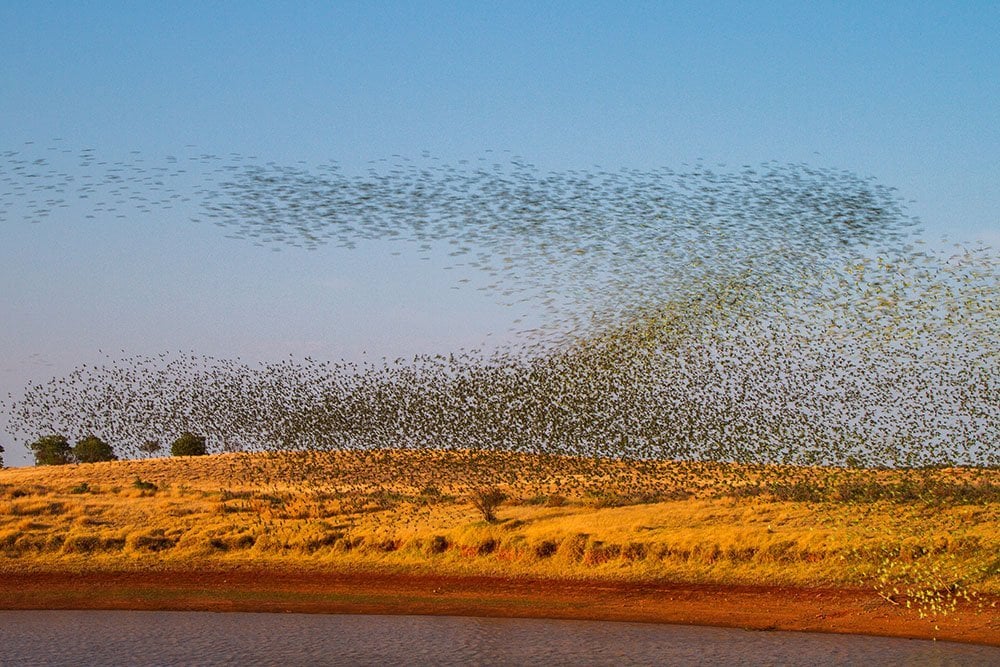 Birds do well in deserts as they have higher body temperatures than mammals and can tolerate temperatures as high as 45°C (113°F) for long periods. Most typical desert species are small, such as the LARKS and COURSERS, and many have opted to stay fairly inactive for much of the day. They also have the advantage of flight, which allows them to travel around the deserts looking for water. In Australian deserts, for instance, budgerigars travel in massive flocks – brightly coloured nomads following the unpredictable rains. When adult birds are looking after their young, the problem of finding water can become even greater. Chicks get their water from the food they are given, and if this is not juicy enough, they will need liquid from some other source. The chicks of the Namaqua sandgrouse have exactly this problem. Somehow the adults must bring them water, even though the nest may be up to 40km (25 miles) from the nearest source. The problem has been solved with a beautifully simple piece of design. The adult male sandgrouse’s unique feathers across his chest and belly soak up water like a sponge. On arriving at the nearest standing water, he first satisfies his own thirst but then wades out until his chest feathers are saturated. As soon as he returns home, the chicks are upon him, jostling for a space to suck from the feathers. In the deserts of ARIZONA and MEXICO, roadrunners have found a different way to get water to their thirsty chicks. These birds nest in CACTUS or thorn bushes and rear two or three chicks, which are able to swallow and digest surprisingly large meals. Insects and even lizards are eagerly accepted from a very early age. But as a meal is handed from parent to chick, a strange dispute ensues. Neither seems to want to let go of the food. This apparent mealtime squabble is an essential feeding ritual. As long as the lizard or insect is held firmly in place, the adult can use it as a way to channel water from its mouth to that of its chick – water that has been produced during the adult’s digestion especially for its brood. Only when the chick has finished drinking can it start to eat its meal.
MAKING YOUR OWN
Mammals whose diets are high in protein have a problem. Protein contains nitrogen and is metabolized into urea, which is highly poisonous if allowed to build up in the body. It must leave the body as urine, which means losing precious water. Some desert animals make up for this by producing metabolic water, made during normal metabolism within the body. For desert mammals such as kangaroo rats, the water budget is so tight that during the day they hide away in cool burrows, sealing up the openings to their nests with plugs of earth. But they still lose so much water through breathing and evaporation that their burrows are moist and their stocks of seeds can even become damp. The kangaroo rats live on a knife’s edge trying to replace this water, and so production of metabolic water can be make or break.
WHY IT PAYS TO HAVE FAT
When green vegetation is available, camels can go for months without drinking. But during the Saharan summer, there is only dry food, and even that is very scarce. Camels can go for a week or more without water and up to ten days without food by burning up the fat stored in their famous humps. Metabolizing the fat with oxygen, they are able to release about 0.5 kg (1 pound) of water for every 0.5kg of fat. When camels are finally able to drink again, they can imbibe up to 30 per cent of their body mass as water in a very short time – 50 litres (11 gallons) in just a few minutes – which they store in their stomachs. The fatty humps and their thick fur also help to insulate them so that they hardly sweat. This insulation is particularly important for the two – humped Bacteria camel, which lives in the deserts of CHINA and MONGOLIA. Daily temperatures in the GOBI DESERT can vary by 32°C (58°F), and for two months of the year, this coldest of deserts can be covered in snow. Unfortunately for the camels, the air here is so dry that the snow never melts but just evaporates into the atmosphere. So the camels have no option but to eat the snow. To swallow large quantities would be dangerous, but with the snow on the ground for long periods, the camels do well, eating ten litres worth of water in snow each day.
DESERT GIANTS
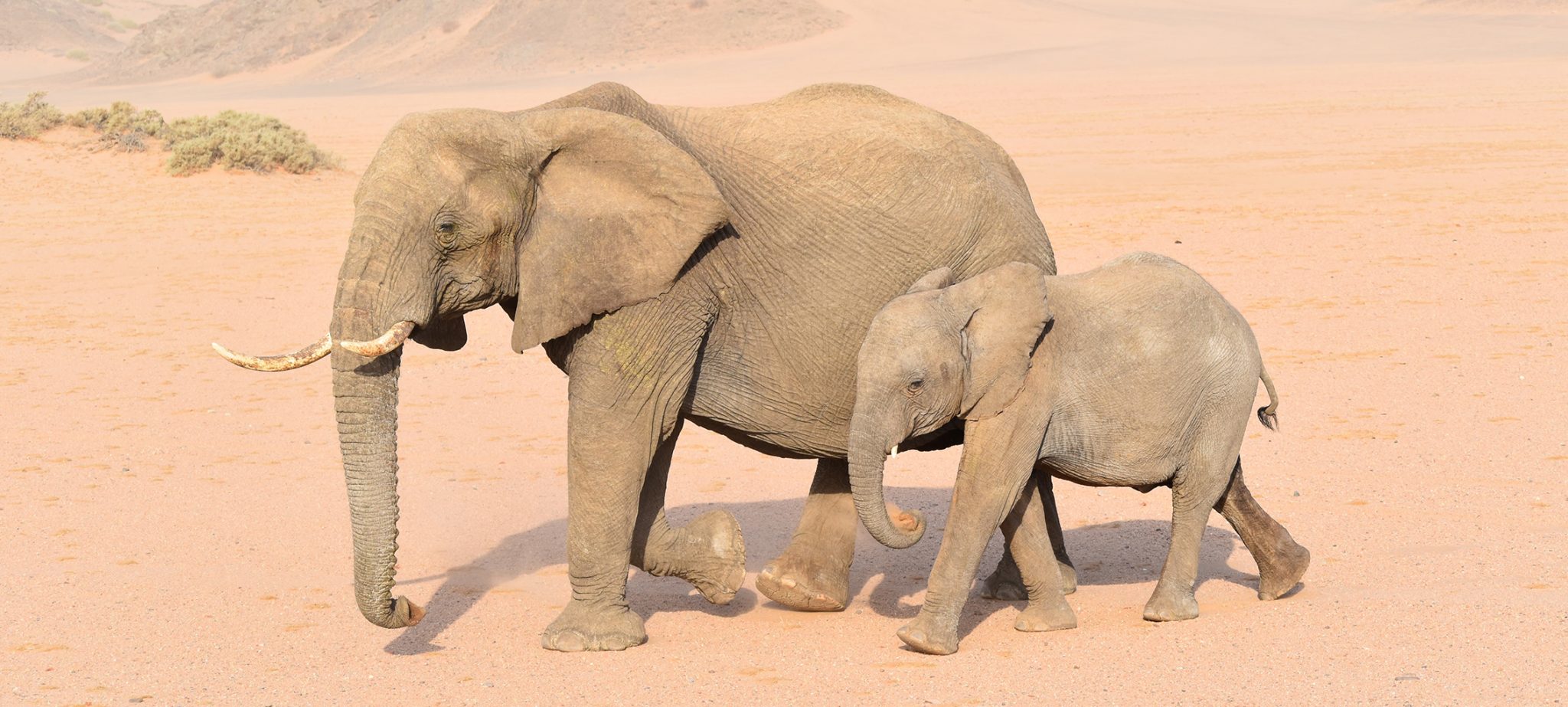
You would not expect to find the world’s largest herbivore in the desert, but there are two small populations of elephants that remain on the edges of the SAHARA in Mali and in the NAMIB DESERT (NAMIBIA) along the coast of southwestern Africa (Namibia). These animals are specially adapted for desert life, with smaller bodies and larger feet than other African elephants. The large feet help them cross the unstable sand on long safaris up to 64km (40 miles) a day in search of food and water. In the NAMIB, the elephants have learnt to dig away beneath the surface of the sand to find the roots of desert grass, which tends to provide the most nourishment. Unlike plains elephants, which need water every day, desert elephants can get away with drinking only once every five days. Even more surprisingly, the NAMIB also has a small population of resident lions that survive by hunting oryx.
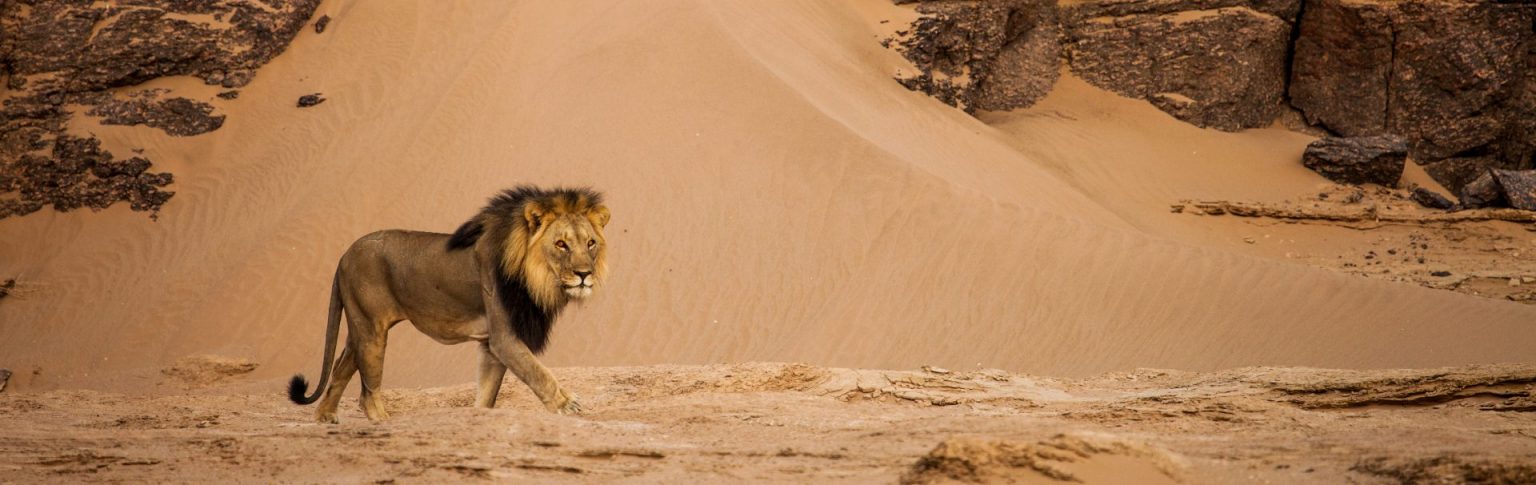
They (lions) have adapted to the demanding conditions by having larger home ranges and smaller prides than lions living elsewhere in Africa. What is remarkable is that, in these low – density conditions, the desert lions manage to produce the largest litters and have the highest cub – survival rate of any African lions. For the moment at least, these mammals have joined the ranks of the incredible desert survivors.